



When a Clinic Opens, a Community Gets More Than a Doctor
It can mean jobs with health benefits, fewer missed school days, and money that stays local. We believe that when we invest in healthcare companies in underserved areas, we are contributing to better health outcomes for residents and strengthening their local economy.

Two Goals
Every Investment Pursues Two Goals*
Care people can reach, and an economic benefit that can help a community stabilize or thrive.
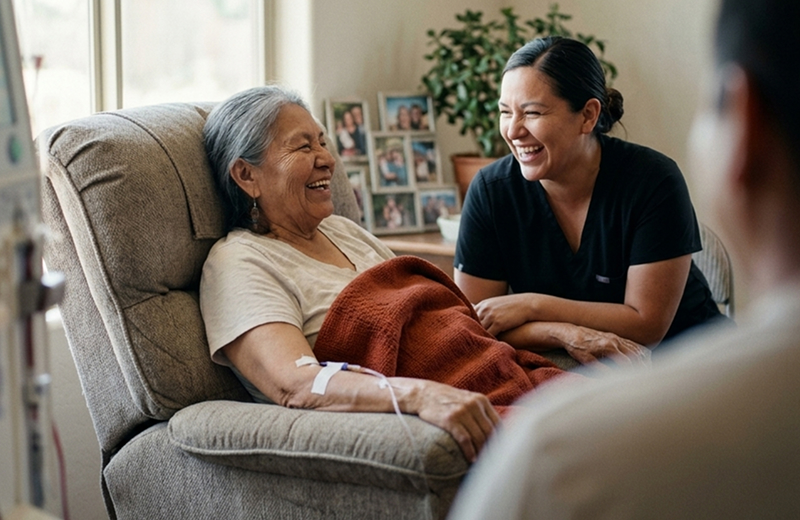
Care People Can Reach
When we invest in a healthcare company, the first goal is simple: bring care closer to the patients. When barriers to care are reduced, patients gain more control over their own health and have more ability to pursue care when it is first needed, rather than when care concerns reach desperate levels. Examples include: at-home dialysis on tribal lands. Mobile surgery delivered in rural towns. Telepsychiatry in local communities across all 50 states.
1,600+
care locations across our portfolio in the United States

Jobs That Can Anchor a Community
In rural and underserved geographies, a job at a clinic, hospital, or behavioral health practice is rarely just a paycheck. Healthcare facilities often provide more than just care—they are foundational employers and can even act as economic engines for many communities. By offering a broad spectrum of jobs across various skill levels, healthcare companies can boost community pride, enhance local income, and often provide employer-sponsored health insurance that can reduce family stress and make care even more accessible.
3x
Average employee count growth per company across Pharos III
*as of June 30, 2026

The Multiplier
Healthcare Infrastructure is Upstream Economic Infrastructure
That is why we believe investing in healthcare in underserved communities lays the foundation for improved upstream economic infrastructure.
$2 to $4
It is estimated that every $1 of healthcare spending creates from $2 to as much as $4 of local economic activity.
Economic studies estimate that each dollar of healthcare spending supports two to four dollars in total economic activity across a community, counting direct, indirect, and induced effects.1
The Virtuous Cycle
What Happens
When Care Is Close
As residents gain access to quality healthcare, they are likely to take fewer sick days from work. That sets a virtuous cycle in motion for residents and their children: higher household incomes, more local spending, a stronger tax base, better school attendance, stronger test scores, and ultimately higher lifetime earnings and economic independence for the next generation.
See how we invest to promote this virtuous cycle.
phase 1
The Patient

1
Care within reach
2
Fewer health emergencies
3
Fewer missed workdays and school days
phase 2
The Household

4
Higher, more stable
household incomes
5
Lower family stress
6
More local spending
phase 3
The Community

7
Stronger tax base
8
More dollars for schools and public services
9
Less crime
10
Better ability to recruit new
business
11
More jobs and the cycle
continues


The Reverse Cycle
What Happens When It Is Not
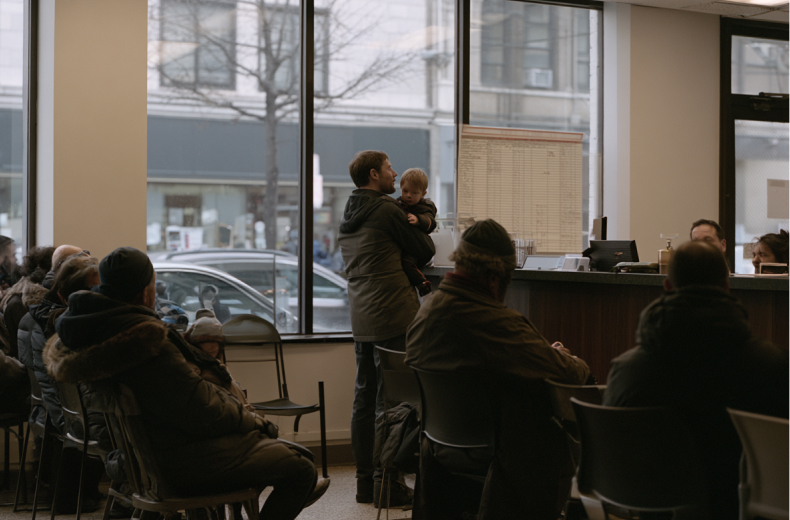
When the nearest appointment is weeks away or more than a 90-minute drive, people are more likely to defer care until they have no choice.
When the nearest appointment is weeks away or more than a 90-minute drive, people are more likely to defer care until they have no choice.
By the time a clinician sees them, conditions have advanced: outcomes are worse, treatment is harder, costs are higher, and each patient consumes more clinician time per visit. That, in turn, shrinks the number of patients a practice can see, which pushes wellness and preventative visits, the least urgent and therefore the first to be cut, even further out of reach.
By the time a clinician sees them, conditions have advanced: outcomes are worse, treatment is harder, costs are higher, and each patient consumes more clinician time per visit. That, in turn, shrinks the number of patients a practice can see, which pushes wellness and preventative visits, the least urgent and therefore the first to be cut, even further out of reach.
Over time, chronic diseases that should have been caught early go undiagnosed and unmanaged, becoming a more costly burden on families and the largest driver of missed work and school days.
Over time, chronic diseases that should have been caught early go undiagnosed and unmanaged, becoming a more costly burden on families and the largest driver of missed work and school days.
See how we invest to break this cycle.
phase 1
The Patient
1
Care out of reach
2
Conditions advance, costs climb
1
Clinics are stretched
phase 2
The Household

4
Preventative care is put on
the back burner
5
Chronic disease
goes unmanaged
6
Workdays and school
days are missed
phase 3
The Community

7
Local businesses suffer
8
Families become stressed
9
Spending is cut back
10
Crime and substance abuse increase


In these underserved communities, healthcare access can drive economic strategy.
POVERTY AND BEHAVIORAL HEALTH
Breaking the poverty cycle requires healthcare. Especially behavioral health.
Unemployment is rarely just an economic event; It is a health event.
Job loss triggers stress, loss of identity, and social isolation: the very risk factors strongly associated with the onset of substance use.2 Unstructured time and reduced accountability accelerate the slide. In communities without health benefits or accessible treatment infrastructure, there is nowhere to turn.
Once substance use takes hold, cognitive function and workplace reliability decline; drug testing and a new criminal record make returning to work harder still; physical health deteriorates with prolonged use. The loop tightens: unemployment could lead to substance use3, which makes work harder to find or keep, which deepens unemployment, which erodes the local tax base, which underfunds the schools and social programs that might have intervened earlier, until what began as a job loss becomes learned hopelessness passed from one generation to the next.
Behavioral Health, Crime, and the Flywheel Restarting
Where treatment is accessible, communities steady themselves.
70%+
The data bears this out: more than 70% of crimes involve addressable behavioral health or substance abuse issues.4
When behavioral healthcare is accessible, crime falls, communities feel safer; families and employers return, and property values rise. The same flywheel, spinning forward again.
Healthcare investments are upstream economic investments
Over time, state Medicaid expenses fall significantly as employer-sponsored coverage expands; preventative care displaces emergency care, and chronic disease is diagnosed and managed earlier. Medicaid savings can be deployed into public works, safety, education, or business recruitment. Healthier residents, healthier balance sheets, healthier communities. That is the return on healthcare investment we are building toward.
We exist to reduce healthcare disparities nationally.
1. American Hospital Association 2025.
2. Morrish, N. and Medina-Lara, A., “Does unemployment lead to greater levels of loneliness? A systematic review,” Social Science & Medicine, 2021.
3. Nolte-Troha, C. et al., “Unemployment and Substance Use: An Updated Review of Studies from North America and Europe,” Healthcare, 2023.
4. National Institute on Drug Abuse, “Criminal Justice DrugFacts,” June 2020.